
Chaotic days rarely end with herbal tea and perfect discipline. They end with a late dinner, unfinished tasks, bright screens, and a brain that still thinks it is midafternoon. The practical mistake is trying to force a full bedtime routine when what you really need is triage. On rough nights, the goal is simpler: stop adding stimulation, close the loudest mental loops, and make the bedroom easy to sleep in. Most adults need at least 7 hours of sleep, but the win tonight is a controlled landing, not a perfect evening. (cdc.gov)
TL;DR
- Aim for a shorter, lower-friction routine, not an aspirational one.
- Use the C.A.L.M. Reset: Close loops, Adjust inputs, Lower stimulation, Make the room easy.
- Late caffeine, alcohol near bedtime, heavy meals, bright light, and screens can all work against sleep; NHLBI notes caffeine can linger for up to 8 hours. (cdc.gov)
- If you are awake in bed and getting frustrated, leave the bed briefly and do something quiet in low light until you feel sleepy again. (medlineplus.gov)
- If sleep problems happen 3 nights a week for 3 months, or you snore loudly, gasp, or feel very sleepy during the day, talk with a clinician. (nhlbi.nih.gov)
Why a messy day spills into the night
Sleep is partly driven by routine cues. Light and darkness help set the body clock, while stress, late work, arguments, and devices keep the brain in problem-solving mode. NHLBI notes that bright artificial light in the late evening can disrupt the normal process that helps the brain release melatonin, making it harder to fall asleep. CDC and NHLBI also flag late caffeine, alcohol, large meals, and heavy stimulation as common sleep disruptors. (nhlbi.nih.gov)
Chaotic days often stack those problems. You skip dinner, grab food late, drink coffee at 4 p.m., answer one more email, and then wonder why your body is tired but your mind is wide awake. That pattern is not a character flaw. It is a cue problem. NHLBI notes that caffeine can interfere with sleep and that its effects can last up to 8 hours. Worrying about sleep itself can also make insomnia worse. (nhlbi.nih.gov)
The C.A.L.M. Reset: a four-part triage for rough evenings
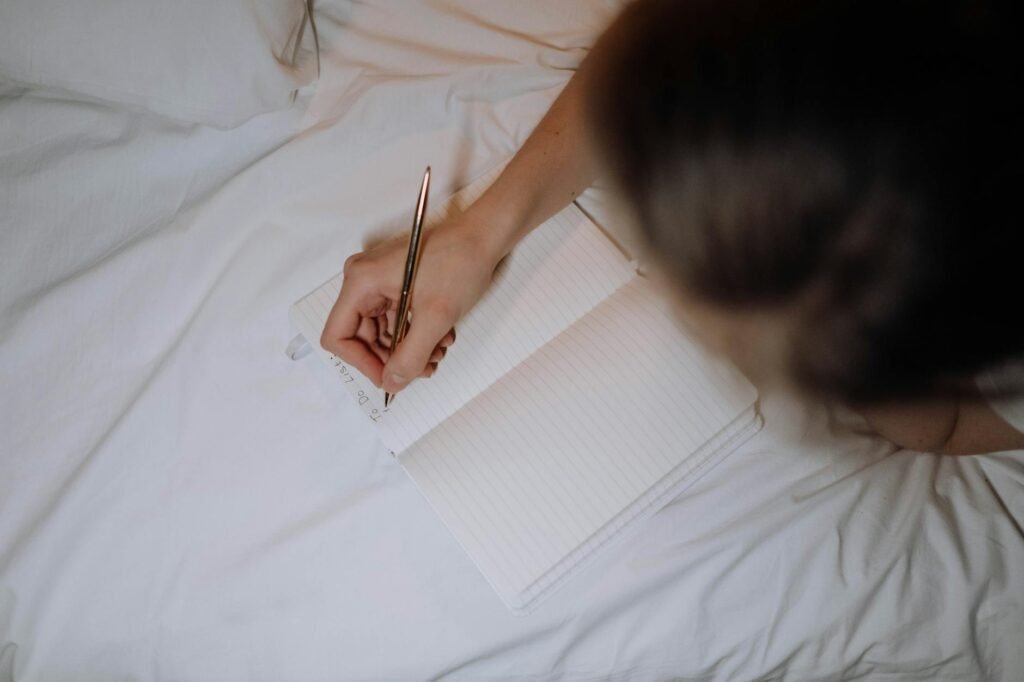
My rule for bad evenings is the C.A.L.M. Reset. It is a four-part triage tool built for nights when you do not have the energy for an ideal routine. Run it in order. If two or more lanes are red, do the reset before you get in bed. If the problem is already physiological, such as late caffeine or alcohol, shift from “How do I sleep perfectly?” to “How do I stop making this night worse and protect tomorrow morning?” A regular sleep and wake schedule still matters, even after a poor night. (cdc.gov)
| Lane | Ask yourself | 2-minute move | Tonight’s rule |
|---|---|---|---|
| Close loops | What unfinished task, money errand, family detail, or text chain is still mentally open? | Write one thing to finish, one thing to defer, and one first task for tomorrow morning. | After the list is written, no new tasks. |
| Adjust inputs | Did I have caffeine late, alcohol near bed, a heavy meal, or late hard exercise? | Drink water, have a light snack only if you are genuinely hungry, and add no new stimulants or nightcaps. | If this lane is red, stop adding inputs. (cdc.gov) |
| Lower stimulation | Am I still under bright light, screens, work, or conflict? | Dim the lights, shut email, and choose one boring offline activity. | Aim for at least the last 30 minutes screen-free if possible. (cdc.gov) |
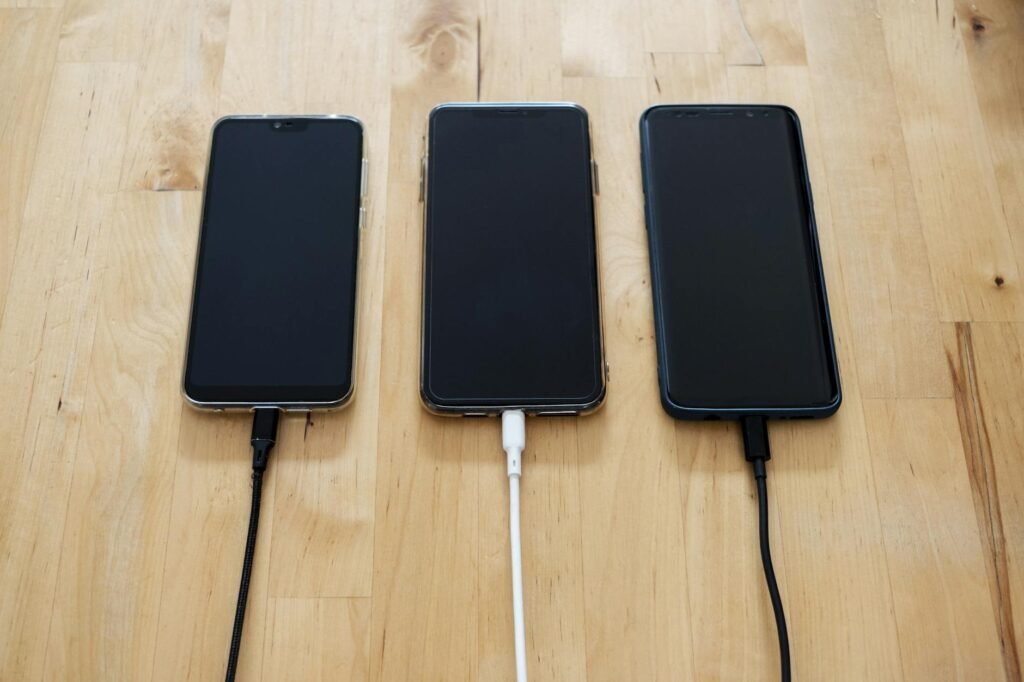
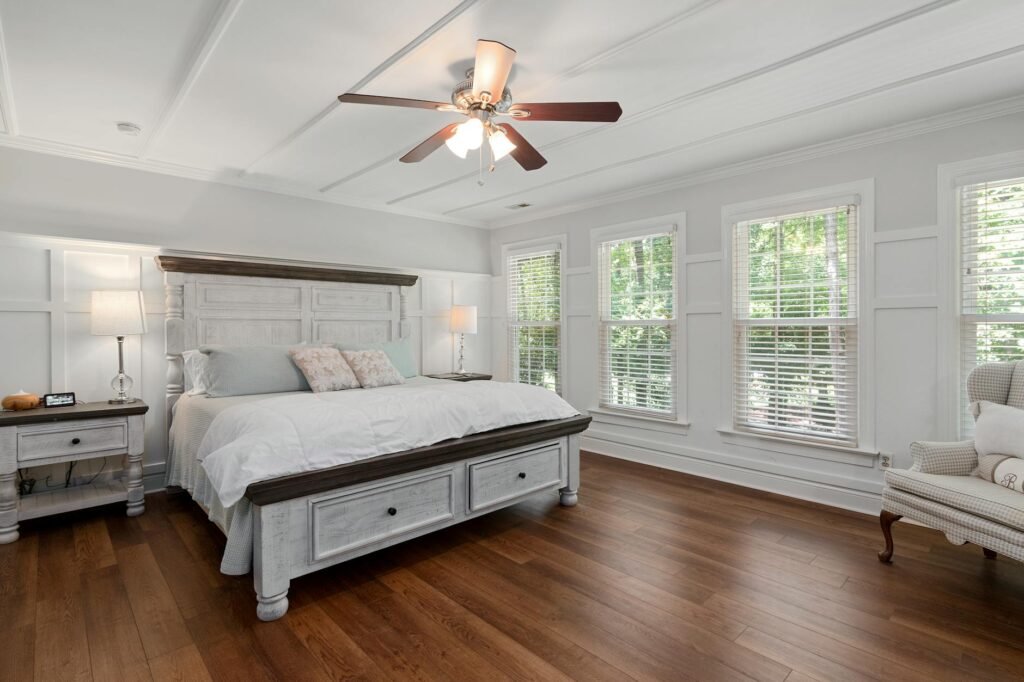
| Make the room easy | Is the room bright, noisy, warm, or full of reminders? | Use what you already own: shades, a fan, earplugs, an eye mask, and a phone charger away from the bed. | Fix the room before trying another hack. (cdc.gov) |
Your 12-minute version for tonight
If you only have a little energy left, this stripped-down sequence is enough. Do not add products, apps, or heroic self-improvement. Use paper, water, dimmer light, and the room you already have.
- During the first three minutes of this exercise, write down three quick things. First, identify what needs to occur today; Second, identify things that do not require immediate action; and Third, think of one thing that needs to be done to prepare you for tomorrow. The idea is to clear your mind of mental distractions, not to create more work for yourself.
- Minutes 4 to 6: Adjust inputs. No more caffeine. Skip the “sleepy” glass of wine. If you are actually hungry, have a small, light snack rather than a heavy meal. CDC, NHLBI, and MedlinePlus all point in that direction for sleep-friendly evenings. (cdc.gov)
- Minutes 7 to 9: Lower stimulation. Shut down email and group chats, dim the lights, and put the phone on a charger away from the bed. CDC recommends turning off electronic devices at least 30 minutes before bedtime, and NHLBI notes that bright artificial light in the late evening can delay sleep readiness. (cdc.gov)
- Minutes 10 to 12: Make the room easy. Aim for cool, dark, and quiet. Then do one brief calming practice, such as slow belly breathing or progressive muscle relaxation. NCCIH describes relaxation techniques as ways to trigger the body’s relaxation response, and NHLBI includes relaxation techniques among healthy sleep habits. (nccih.nih.gov)
If you get into bed and feel yourself getting more frustrated than sleepy, get up and do something quiet and relaxing in low light for a short stretch, then try again. MedlinePlus specifically advises getting out of bed if you have been lying awake for about 15 minutes, so the bed does not become a place of stress. (medlineplus.gov)
What to do for the exact problem you have
| If the problem is… | Do this next | Skip this |
|---|---|---|
| You feel exhausted but mentally loud | Dim the lights, do 5 minutes of breathing or progressive muscle relaxation, and choose one low-effort offline activity. | More email, news, or social scrolling. |
| You are hungry at 10 p.m. | Have a small snack and keep it light. | Heavy takeout or a big dessert. |
| You had caffeine late | Assume sleep may come later, stop all additional stimulants, and keep tomorrow’s wake time steady. | A nightcap to counteract it. |
| You already drank alcohol | Stop there, hydrate, lower the lights, and protect the room conditions. | More alcohol as a sleep tool. |
| The house is noisy or shared | Use a fan, earplugs, an eye mask, or a simple white-noise option you already own. | Lying there hoping the environment improves on its own. |
| You are behind on tomorrow | Write the first task and a start time, then shut the list. | A full productivity sprint at bedtime. |
A realistic example: the $0 reset
Consider a realistic weekday. Maya, 39, gets home at 7:10 p.m. after a late meeting and a long commute. She eats takeout at 8:40, answers email at 10:05, remembers a school form and a utility bill, and realizes she had a large iced coffee at 4:15. Her original plan was to be asleep by 10:45. That is no longer a realistic target.
Using the C.A.L.M. Reset, Maya spends 12 minutes instead of trying to manufacture a perfect routine. She writes: pay bill tomorrow at 8:30, sign school form before breakfast, reply to manager after 9:00. She skips wine, drinks water, and does not add more food because dinner was already late and heavy. She moves her phone to charge in the kitchen, turns on a fan, dims the hallway light, and does 2 minutes of slow breathing. She may still fall asleep later than usual because of the late coffee, but she has removed three extra sources of stimulation. The cost is $0, and the routine is practical enough to repeat. The principles match standard sleep guidance on caffeine, alcohol, light, electronics, relaxation, and room conditions. (cdc.gov)
The key judgment is this: after a chaotic day, do not try to solve your whole life at 10:30 p.m. Solve tonight’s friction.
Common mistakes that make a rough night worse
- Turning bedtime into a second work shift. A short written shutdown works better than trying to clear your entire inbox at night.
- Using alcohol as a sedative. It can make you sleepy at first, but alcohol before bed can interfere with sleep and may worsen upper-airway collapse in people with sleep apnea. (cdc.gov)
- Assuming one bad night should be fixed by sleeping in for hours. A regular schedule helps keep the body clock steadier. (cdc.gov)
- Buying sleep gadgets before fixing the basics: late caffeine, bright light, noise, and work spillover.
- Staying in bed angry and clock-watching. NHLBI notes that worrying about sleep can make insomnia worse, and MedlinePlus advises keeping the bed from becoming a place of stress. (nhlbi.nih.gov)
When the first plan is not enough
Some evenings are not fixable with a tidy routine. Shift work, caregiving, new parent life, chronic pain, reflux, anxiety, medication side effects, and inconsistent schedules can all overwhelm normal sleep-habit advice. NHLBI notes that short-term insomnia can follow stress or schedule changes, while chronic insomnia is a longer pattern that may need structured treatment. (nhlbi.nih.gov)
- If your schedule changes constantly, build anchors instead of a perfect bedtime: protect wake time as much as possible, get earlier daylight when you can, and cut caffeine earlier in the day. (cdc.gov)
- If naps are wrecking nighttime sleep, keep them earlier and brief. NHLBI suggests limiting naps or keeping them earlier in the afternoon if you have trouble falling asleep at night, and says adults should nap no more than 20 minutes. (nhlbi.nih.gov)
- If sleep problems happen 3 or more nights a week for 3 months, ask about CBT-I. NHLBI describes CBT-I as a 6- to 8-week treatment plan and says it is usually the first treatment option for long-term insomnia; it can be done in person, by phone, or online. (nhlbi.nih.gov)
- If someone tells you that you snore loudly, stop breathing, or gasp in your sleep, or if you are very sleepy during the day, ask about sleep apnea. (nhlbi.nih.gov)
An expensive backup plan is not necessary. Basic tools for the service include an index card, a common spot to charge your devices (keep them off your bedside), a fan to create some white noise, earplugs, and an eye mask. Most people save money by eliminating friction rather than purchasing another gadget.
How to pressure-test your routine for one week
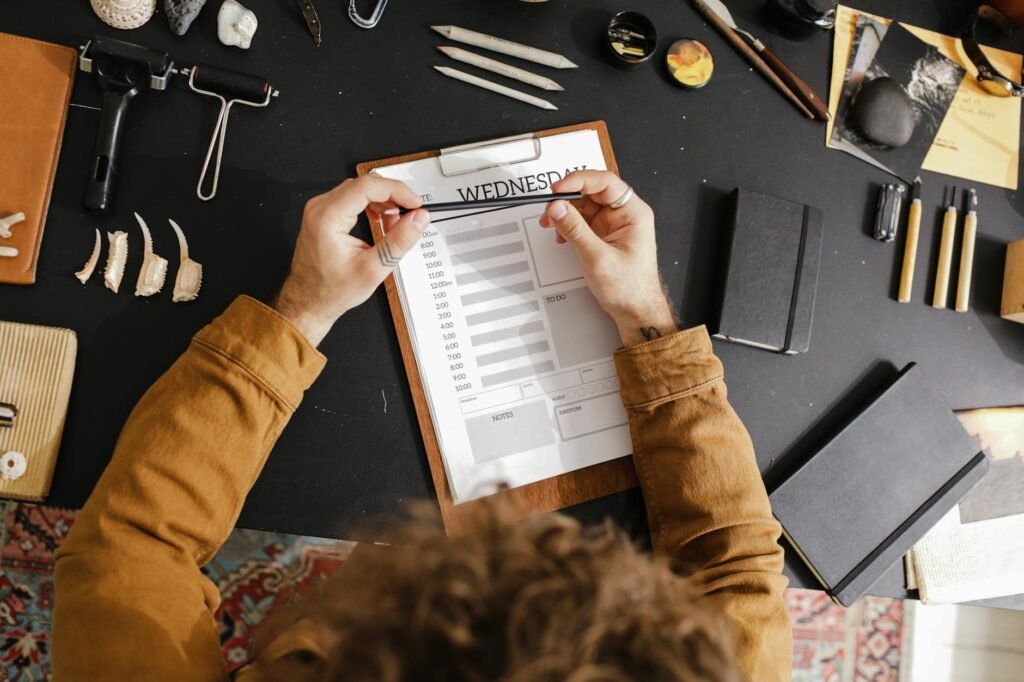
Do not judge an evening routine by one tired night. Pressure-test it for seven nights with a simple sleep diary. NHLBI offers a one-page diary that tracks sleep timing, wake-ups, caffeine, alcohol, medicines, naps, and daytime sleepiness. (nhlbi.nih.gov)
- Keep wake time within about 30 minutes if your schedule allows. The goal is to give your body clock a clearer anchor. (cdc.gov)
- Track five items: last caffeine time, last alcohol time, screen cutoff, time in bed, and how long it seemed to take to fall asleep. NHLBI specifically recommends tracking sleep timing plus caffeine, alcohol, and daytime sleepiness. (nhlbi.nih.gov)
- Give the C.A.L.M. Reset a nightly score from 0 to 4. Over a week, look for the lane that keeps going red. That is the real target.
- Consider auditing your day following the same way you audited your night. Audit your morning for alertness, patience, and whether you need extra caffeine to make it through your day. If your plan looks good on paper but your actual days are still in a mess – then not enough is being done to improve the outcome of your day’s experience.
Verification matters because chaotic-day sleep problems are often pattern problems, not single-night problems. A short diary makes the pattern visible and gives you something concrete to bring to a clinician if you need help. (nhlbi.nih.gov)
The bottom line
After a chaotic day, a sleep-friendly evening is mostly a subtraction exercise. Close the loudest loops, stop late inputs that keep you alert, lower stimulation, and make the room easier. If that works, keep it simple. If it keeps failing, treat that as information, not personal failure, and step up to a sleep diary, CBT-I, or a medical evaluation when the pattern fits. (nhlbi.nih.gov)
How long before bed should I stop using my phone?
CDC recommends turning off electronic devices at least 30 minutes before bedtime. If that feels unrealistic on a rough night, start by moving the phone out of arm’s reach and using only one low-stimulation task during that last half hour. (cdc.gov)
Is a glass of wine okay if I am too keyed up to sleep?
Alcohol can make you feel sleepy, but official sleep guidance still recommends avoiding alcohol before bed because it can interfere with sleep. NHLBI also notes that alcohol can relax the muscles of the mouth and throat and worsen upper-airway blockage in sleep apnea. (cdc.gov)
What if I had coffee late and now I cannot fall asleep?
Do damage control instead of forcing sleep. Stop all additional caffeine, lower light and stimulation, and keep tomorrow’s wake time as normal as you can. NHLBI notes that caffeine can interfere with sleep and may last up to 8 hours. (nhlbi.nih.gov)
When should I ask about CBT-I?
If sleep problems are happening 3 or more nights a week for 3 months or longer, that fits NHLBI’s description of chronic insomnia. NHLBI says CBT-I is usually the first treatment option for long-term insomnia and can be delivered in person, by phone, or online. (nhlbi.nih.gov)
Should I just buy melatonin or an OTC sleep aid?
Not as your default fix for a chaotic week. NHLBI notes that the FDA does not review dietary supplements for safety and effectiveness before they are marketed, and melatonin can cause side effects including excess sleepiness, headaches, stomach upset, and worsening depression. If you are thinking about using a sleep product regularly, check with a clinician or pharmacist first. (nhlbi.nih.gov)
References
- CDC: About Sleep – https://www.cdc.gov/sleep/about/index.html
- CDC: About Sleep and Your Heart Health – https://www.cdc.gov/heart-disease/about/sleep-and-heart-health.html
- NHLBI: Healthy Sleep Habits – https://www.nhlbi.nih.gov/health/sleep-deprivation/healthy-sleep-habits
- NHLBI: How Sleep Works – Your Sleep/Wake Cycle – https://www.nhlbi.nih.gov/health/sleep/sleep-wake-cycle
- NCCIH: 5 Things To Know About Relaxation Techniques for Stress – https://www.nccih.nih.gov/health/tips/things-to-know-about-relaxation-techniques-for-stress
- NCCIH: Sleep Disorders and Complementary Health Approaches – https://www.nccih.nih.gov/health/sleep-disorders-in-depth
- NHLBI: Insomnia – https://www.nhlbi.nih.gov/health/insomnia
- NHLBI: Insomnia Treatment – https://www.nhlbi.nih.gov/health/insomnia/treatment
- NHLBI: Sleep Apnea Symptoms – https://www.nhlbi.nih.gov/health/sleep-apnea/symptoms
- MedlinePlus: Can’t sleep? Try these tips – https://medlineplus.gov/ency/patientinstructions/000853.htm
- NHLBI: Sleep Diary – https://www.nhlbi.nih.gov/resources/sleep-diary
- NHLBI: Sleep Disorder Treatments – https://www.nhlbi.nih.gov/health/sleep-disorder-treatments