
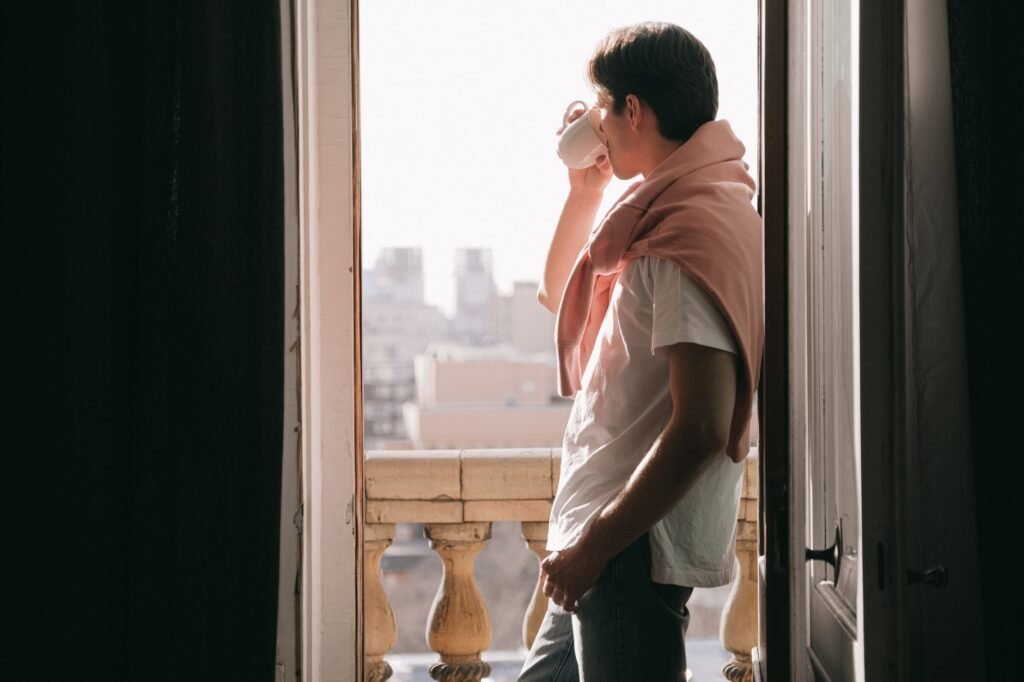
Many people treat trouble falling asleep like a nighttime problem, so they shop for nighttime fixes: melatonin gummies, sleepy tea, blue-light glasses, a new pillow, maybe a sound app subscription. Sometimes those help. But one quieter problem often starts much earlier: spending the first part of the morning in dim indoor light. Light is one of the main cues that sets your circadian rhythm, the internal timing system that helps determine when you feel alert and when melatonin rises. (nigms.nih.gov)
If your usual routine is bedroom to bathroom to car to office, all before you have had real daylight, your body may get a weaker “day has started” signal. CDC and NHLBI guidance both point to daylight, especially earlier in the day, as a practical sleep lever, and NIOSH notes that light around your usual wake time tends to shift the body clock earlier while evening light shifts it later. (cdc.gov)
TL;DR
- The habit: starting the day in dim indoor light instead of getting bright outdoor light early. (nhlbi.nih.gov)
- Why it matters: morning light helps anchor the sleep-wake cycle, while evening light tends to push that cycle later. (nigms.nih.gov)
- Practical target: get outside in the first hour after waking and keep it up for two weeks before judging it. NHLBI says to get outside in natural sunlight for at least 30 minutes daily, and its sleep guide notes that people who struggle to fall asleep may benefit from an hour of morning sunlight. (nhlbi.nih.gov)
- Important exception: if you snore loudly, gasp for air, or have chronic insomnia or major daytime sleepiness, do not assume light is the whole answer. (nhlbi.nih.gov)
The habit hiding in plain sight
The common sleep story is about late-night screens, and that matters. But sleep timing is a 24-hour system. When your brain gets strong morning light, it helps keep your internal clock aligned with day and night. When mornings are dim and nights are bright, the timing signal can tilt the wrong way: less push to feel alert early, more tendency to stay alert later. (nigms.nih.gov)
That helps explain why someone can feel tired all day yet still not feel ready for bed at 10:30 p.m. The issue is not always a lack of fatigue. Sometimes it is mistimed alertness. CDC guidance also pairs natural light earlier in the day with a regular sleep schedule, which is a useful clue: the best sleep habits usually work as a system, not as isolated hacks. (cdc.gov)
Use the First-Hour Light Score
Here is a quick screening tool created for this article: the First-Hour Light Score. It is not a diagnosis. It is a practical way to see whether your mornings are likely working against your nights, based on the fact that light near your usual wake time has an outsized effect on circadian timing. (cdc.gov)
- 0 points: You get outside within 15 minutes of waking most days. 1 point: 15 to 60 minutes. 2 points: more than 60 minutes.
- 0 points: You get at least 30 minutes of daylight before noon. 1 point: 10 to 29 minutes. 2 points: less than 10 minutes most days. (nhlbi.nih.gov)
- 0 points: Your first hour is bright or outdoors. 1 point: mixed. 2 points: almost entirely dim indoor light. (cdc.gov)
- 0 points: Your wake time is fairly consistent, even on weekends. 1 point: it drifts a bit. 2 points: weekends are a different schedule. (nhlbi.nih.gov)
- 0 points: You usually fall asleep within 30 minutes. 1 point: some nights take longer. 2 points: it often takes 30 minutes or more. (cdc.gov)
Add it up. As a rule of thumb, 0 to 3 means morning light probably is not your main issue. A 4 to 6 means it is worth a two-week test. A 7 to 10 means your first hour is a strong suspect, especially if your evenings are also bright. That does not rule out insomnia, medication effects, circadian disorders, or sleep apnea. It simply tells you where to test first. (nhlbi.nih.gov)
Why this matters before you spend money on sleep fixes
A lot of sleep spending happens at night because the pain point shows up at night. That is understandable. But morning light is one of the rare sleep levers that is usually free, and it targets the timing system upstream rather than only treating the downstream symptom of lying awake. (nigms.nih.gov)
Consider a composite household example. Erin and Malik spend $19 a month on melatonin gummies, $11 on herbal sleep tea, and $14 on a premium sleep-sounds app. That is $44 a month, or $528 a year. Their actual morning routine is a classic light gap: wake at 6:15 a.m., scroll in bed, get two kids ready, drive to work, and stay indoors until lunch. Instead of adding another purchase, they test a $0 change first: 20 minutes outside after drop-off, breakfast in the brightest part of the kitchen, and dimmer lights after 9 p.m. If that still is not enough after two weeks, then a low-cost timed lamp or dawn-style light may be the next step, not the first. (cdc.gov)
What to do tomorrow morning
- Get light early. Aim to step outside within the first hour after waking. Morning light around your usual wake time tends to shift sleep earlier, which can make bedtime come more naturally. (cdc.gov)
- Stay out long enough to count. Start with 15 to 30 minutes outdoors. If falling asleep is a persistent problem, test closer to an hour of morning sunlight if practical. (cdc.gov)
- Add it onto a convenient/regular activity. For example- if you drink coffee, take a break from work and walk your dog for just 10 minutes and do a couple loops around your neighborhood OR if you can manage to make at least one phone call from your mobile while walking. The ideal scenario would be to take part in this activity every weekdays.
- If you wake before sunrise, turn on bright lights immediately, then get outside once the sun is up. For very early schedules, NIOSH notes that a timer-based bedroom light or dawn simulator can help. (cdc.gov)
- Protect the other end of the day. Dim lights before bed and keep bright screens and lighting from stretching your evening later. (cdc.gov)
- Keep your wake time steady. Sleeping much later on weekends can make Monday morning harder and can work against an earlier bedtime. (nhlbi.nih.gov)
Which version fits your routine?
| If your morning looks like this | Do this first | Why it fits | If it still is not enough |
|---|---|---|---|
| You do not see daylight until lunch | Take your first coffee, dog walk, or phone call outside within the first hour after waking | CDC says bright light in the first hours of the day is particularly helpful. (cdc.gov) | Hold that for 14 days before buying anything else. |
| You wake before sunrise | Turn on bright lights right away, then add outdoor light after sunrise | NIOSH suggests bright morning light and, for very early starts, timed bedroom light or a dawn simulator. (cdc.gov) | If early starts are permanent and sleep is still short, ask a clinician or sleep specialist about a personalized timing plan. (cdc.gov) |
| You work from home and stay indoors most of the morning | Do a 15- to 30-minute loop outside before logging on | Even cloudy outdoor time is better than exclusive dim indoor light. (cdc.gov) | Use the brightest indoor area as a backup on impossible days. (cdc.gov) |
| Your nights are still bright and stimulating | Keep the morning walk, but dim lights 1 to 2 hours before bed | Evening light can shift the body clock later, while dimmer pre-bed lighting supports sleep timing. (cdc.gov) | If screens are unavoidable, at least lower brightness and keep room lighting soft. (cdc.gov) |
| You work overnight or rotating shifts | Do not blindly follow daytime advice | Standard morning-light advice assumes you sleep at night and stay awake in the day. Shift workers often need a different timing strategy. (cdc.gov) | Bring your schedule to a clinician or sleep specialist instead of guessing. (cdc.gov) |

Common mistakes that erase the benefit
- Waiting until lunch for daylight. Daylight helps anytime, but CDC says the first hours of the day are particularly helpful. (cdc.gov)
- Trying to out-hack a drifting schedule. NHLBI notes that sleeping later on weekends does not fully make up weekday sleep loss and can make Monday wake-ups harder. (nhlbi.nih.gov)
- Letting the house stay bright late into the evening. Evening light tends to shift the body clock later. (cdc.gov)
- Expecting morning light to make 5 hours of sleep enough. Morning light helps with timing, but most adults still need at least 7 hours of sleep. (cdc.gov)
- Using late caffeine to cover poor sleep. NHLBI says caffeine can take as long as 8 hours to wear off fully, so a late-afternoon coffee can still interfere with sleep onset. (nhlbi.nih.gov)
- Treating a chronic problem like a simple habit issue. If you are regularly taking 30 minutes or more to fall asleep, waking often, or relying on frequent naps, it may be time to talk with a clinician rather than trying another self-experiment. (cdc.gov)
If the simple fix does not work
Morning light is a strong first test, but it is not a cure-all. It may not be enough if your sleep is being disrupted by a medical condition, medicines, pregnancy or menopause, a circadian rhythm disorder, or sleep apnea. NHLBI specifically notes that clinicians look for health problems, medications, pregnancy or menopause, and other sleep disorders when evaluating insomnia. (nhlbi.nih.gov)
Shift workers need a different playbook. Standard “get morning light” advice assumes a daytime schedule. If you work overnight or rotating shifts, your timing strategy should match your actual sleep window, and it often makes sense to get individualized guidance instead of improvising. (cdc.gov)
Warning: This article is for general information, not medical advice. Talk with a licensed clinician or sleep specialist if sleep trouble is affecting daily function, if it happens at least 3 nights a week for 3 months, or if you have loud snoring, gasping, or major daytime sleepiness. (nhlbi.nih.gov)
How to pressure-test this for 14 days
Do not judge this after one better or worse night. Use a 14-day audit. NHLBI recommends a 1- to 2-week sleep diary when sleep problems need evaluation, and that same window works well for a self-test. (nhlbi.nih.gov)
- Keep your wake time within about 30 minutes every day. (cdc.gov)
- Record how many minutes you spent outside in the first hour after waking, and whether it happened before noon.
- Estimate how long it took to fall asleep each night: under 15 minutes, 15 to 30 minutes, or over 30 minutes. (cdc.gov)
- Note late caffeine, naps after 3 p.m., and unusually bright late-night light exposure, because each can muddy the result. (nhlbi.nih.gov)
- After two weeks, examine the average again. A sooner bedtime (feeling tired) with a shorter time until sleepy means you’ve likely discovered a true lever. If every again no change has occurred, pursue alternative backup plan rather than doubling-down without thought.
A good audit result is not perfection. It is direction. If you go from taking 45 minutes to fall asleep to around 20 most nights, that is meaningful. If you see no shift at all, bring your diary to primary care or a sleep specialist. That makes the visit more useful and can speed evaluation for insomnia, apnea, or another sleep disorder. (nhlbi.nih.gov)
Bottom line
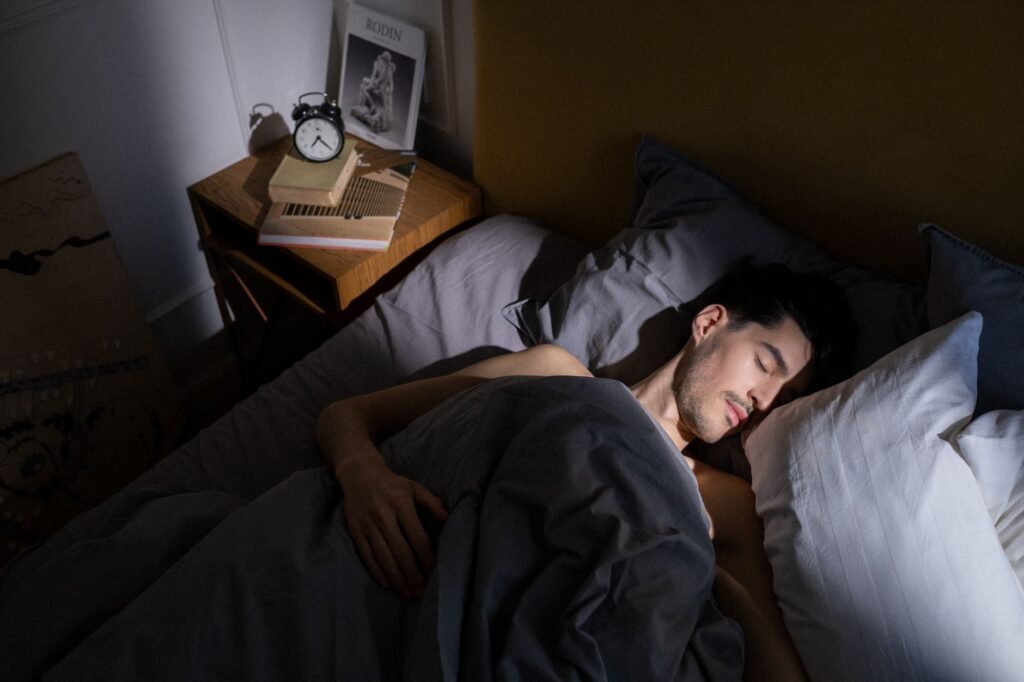
The quiet morning habit that can make nights harder is spending the start of the day in dim light. Before you spend more money on nighttime fixes, test a simpler upstream change: get bright light early, keep your wake time steady, and dim the other end of the day. It is low-cost, biologically plausible, and easy to audit. If it does not help after a fair test, that is useful information too, because it points you toward a fuller sleep evaluation instead of more guesswork. (cdc.gov)
FAQ
How much morning light should I aim for?
Start with 15 to 30 minutes outdoors within the first hour after waking. NHLBI says to get outside in natural sunlight for at least 30 minutes a day, and its sleep guide notes that people who struggle to fall asleep may benefit from an hour of morning sunlight. (nhlbi.nih.gov)
What if I wake up before sunrise?
Turn on bright lights immediately, then add outdoor light once the sun is up. For very early work start times, NIOSH suggests increasing light exposure before waking with a timed lamp or dawn simulator. (cdc.gov)
Does sitting by a window count?
It is better than staying in the dark, but CDC says even time outside on a cloudy day is better than exclusive exposure to dim indoor light. When outside is not practical, use the brightest indoor area you have. (cdc.gov)
Can a light box replace sunlight?
Sometimes, especially in darker months or when natural light is limited. NIMH describes light therapy for seasonal affective disorder as 30 to 45 minutes first thing in the morning with a 10,000-lux light box, but people with certain eye conditions or medications that raise light sensitivity should use it under medical supervision. (nimh.nih.gov)
When should I stop self-testing and call a doctor?
If sleep trouble affects daily life, if you have difficulty falling or staying asleep at least 3 nights a week for 3 months, or if you have loud snoring, gasping, or major daytime sleepiness, book medical care rather than assuming it is just a bad habit. A 1- to 2-week sleep diary can help the visit go faster. (nhlbi.nih.gov)
References
- CDC: About Sleep and Your Heart Health – https://www.cdc.gov/heart-disease/about/sleep-and-heart-health.html
- NIGMS: Circadian Rhythms – https://nigms.nih.gov/education/fact-sheets/Pages/circadian-rhythms
- NHLBI: Your Guide to Healthy Sleep – https://www.nhlbi.nih.gov/files/docs/public/sleep/healthy_sleep
- CDC NIOSH: Effects of Light on Circadian Rhythms – https://www.cdc.gov/niosh/work-hour-training-for-nurses/longhours/mod2/19.html
- CDC NIOSH: Using Light to Promote a Better Morning Wake-Up Time and Sleepiness in the Evening – https://www.cdc.gov/niosh/work-hour-training-for-nurses/longhours/mod8/03.html
- CDC NIOSH: Improve Sleep: Tips to Improve Your Sleep When Times Are Tough – https://www.cdc.gov/niosh/bulletin/2020/sleep.html
- NHLBI: Insomnia Diagnosis – https://www.nhlbi.nih.gov/health/insomnia/diagnosis
- NHLBI: Sleep Apnea Symptoms – https://www.nhlbi.nih.gov/health/sleep-apnea/symptoms
- NIMH: Seasonal Affective Disorder – https://www.nimh.nih.gov/health/publications/seasonal-affective-disorder
- CDC: FastStats Sleep in Adults – https://www.cdc.gov/sleep/data-research/facts-stats/adults-sleep-facts-and-stats.html
- CDC: Diabetes and Shift Work – https://www.cdc.gov/diabetes/articles/diabetes-shift-work.html