
If your body is in bed but your mind is still answering emails, replaying conversations, or building tomorrow’s to-do list, the problem usually is not that you “don’t know how to relax.” The problem is that the day never really ended. Adults generally need 7 to 9 hours of sleep, yet the CDC reported that 30.5% of US adults slept less than 7 hours on average in 2024. (medlineplus.gov)
That matters for more than mood. Poor or short sleep can make it harder to think clearly, focus, react, solve problems, and make decisions. (nhlbi.nih.gov) For many households, that means the same tired hour at night can turn into the hour of doomscrolling, takeout ordering, “treat myself” spending, and low-quality planning that creates a mess for the next morning. A wind-down rule is a sleep habit, but it is also a decision-protection habit.

TL;DR
- The last 20 minutes before bed should close the day, not extend it.
- A good wind-down reduces inputs, parks unfinished tasks, and makes tomorrow feel contained.
- The PARK-20 method in this article gives you a simple script to follow every night.
- You do not need to buy products to do this well; consistency matters more than gear.
- If you still cannot sleep, get up after about 20 minutes and do something relaxing, then talk to a health professional if the problem keeps going. (medlineplus.gov)
Why your brain keeps replaying the day
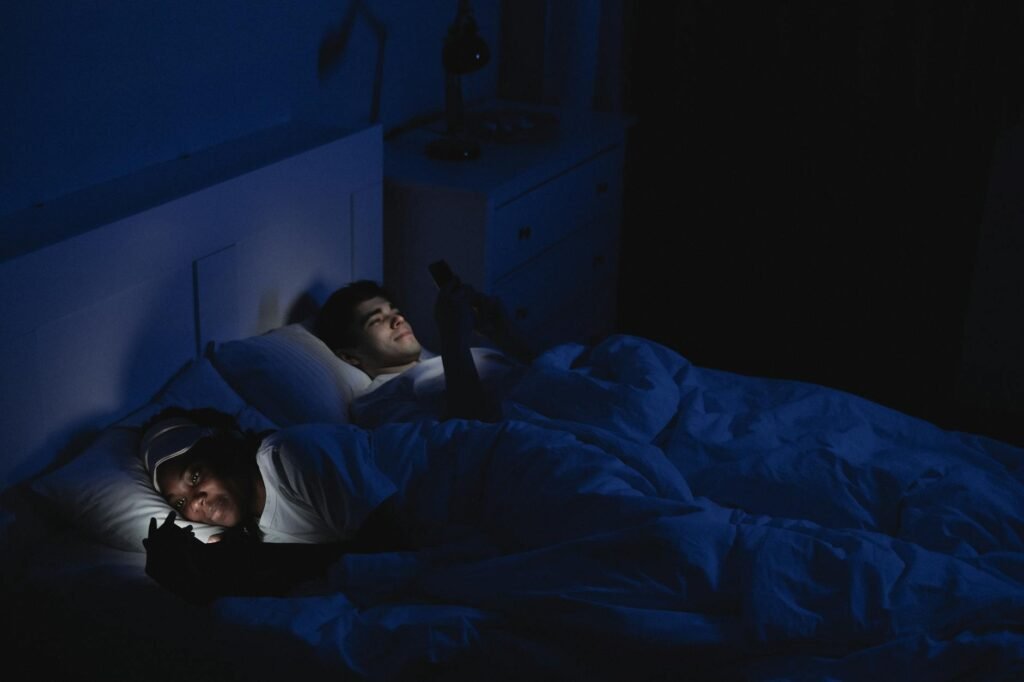
Your brain does not switch from “solve” mode to “sleep” mode just because you changed rooms. Internal body clocks are shaped by light, darkness, and sleep schedules, and official sleep guidance warns that light from electronic devices can disrupt your sleep-wake cycle. Stress also commonly shows up as trouble sleeping. (nhlbi.nih.gov) So if the last thing you do each night is look at bright screens, juggle unresolved tasks, or check money worries in bed, your brain gets a clear message: stay alert, there is still more to process.
That’s one reason vague advice like “just relax” is seldom successful: Many require a closing routine rather than one feeling. Consider it a form of daily closing out; you are not trying to fall asleep on offer; instead, you are stopping the mental clock from running without any changes.
Use the PARK-20 method
The original platform creates an operational rule: PARK – 20 – It’s effectively splitting last 20 min before sleep into 4 ‘job length’ tasks – Not more work – Just, proof for your brain that the tasks are important enough to have a spot, next step, and stopping (end) place.
- P – Park open loops for 4 minutes. On paper, write the three things your brain keeps bringing up. Next to each one, write the next physical action, not the full project. Example: “electric bill – pay Thursday at 7:30 p.m.” or “presentation – draft first slide at 9:00 a.m.” The goal is containment, not completion.
- A – Plan ahead for tomorrow in four minutes. Determine your top priority or two of your morning tasks. Be prepared with all items you will need the following day, such as notebook, lunch, workout clothing, forms for school, medication, or payment for bills. This will help reduce the amount of work for your mind the next day so that you are not constantly trying to figure out what you need to do.
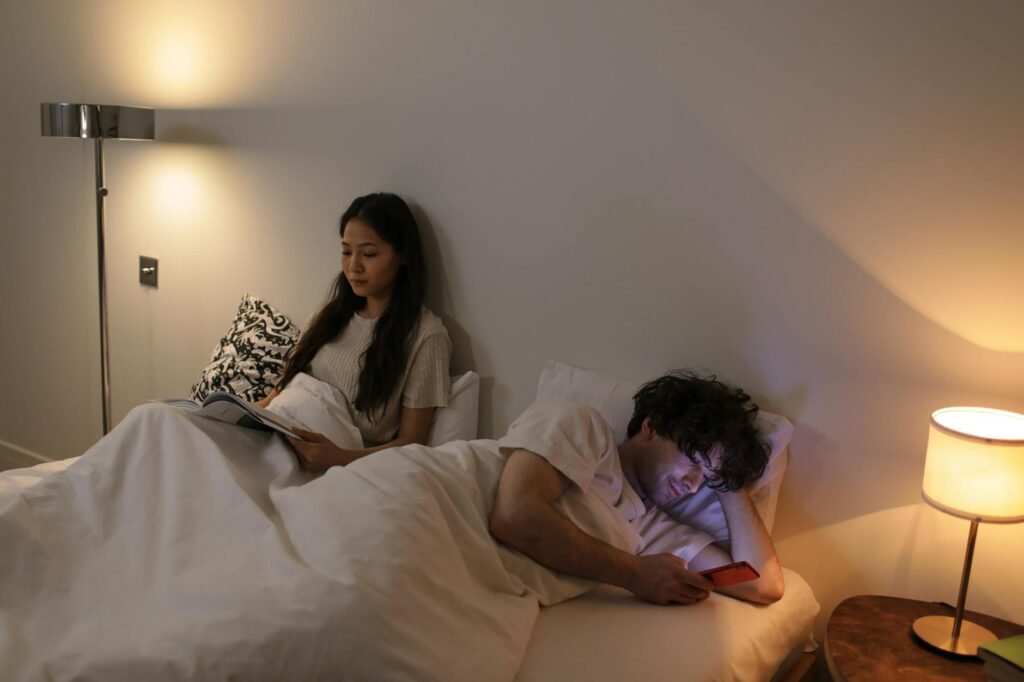
- R – Reduce stimulation for 6 minutes. Dim lights, close work tabs, silence alerts, and move the phone out of arm’s reach. NHLBI guidance specifically warns that light from TVs and electronic devices can disrupt the sleep-wake cycle. (nhlbi.nih.gov)
- K – Keep the last 6 minutes boring. Read a few pages of a familiar book, stretch gently, sit quietly, or use a brief relaxation exercise. If you later get into bed and still cannot fall asleep after about 20 minutes, MedlinePlus says to get up and do something relaxing. (medlineplus.gov)
A realistic example with numbers
Consider a composite example. Dana, 38, works a salaried office job and has two school-age kids. Her usual night looks productive on paper but messy in practice: 10 minutes checking work messages, 15 minutes comparing grocery prices, 20 minutes browsing sales, then a tired “I deserve this” order from a delivery app once or twice a week. Her lights-out time drifts from 10:45 p.m. to 11:35 p.m., and she wakes up already behind.
After switching to PARK-20, Dana starts her wind-down at 10:15 p.m. She parks tomorrow’s money task on paper instead of checking the bank app in bed, lays out the kids’ forms and her laptop charger, and charges her phone in the kitchen. Over a month, her late-night delivery orders fall from 6 to 2. If those skipped orders averaged $27 each, that is about $108 saved in a month, or $1,296 over a year. The bigger gain is not just the money. It is that bedtime stops being the family’s leak point.

Match the rule to the reason your brain is busy
Official sleep guidance consistently points to a few levers: regular timing, less evening stimulation, fewer screens, and a pre-bed routine that helps you unwind. (nhlbi.nih.gov) Use the table below to tailor your 20 minutes instead of repeating generic advice.
| If the real issue is… | Use your 20 minutes for… | Skip this tonight |
|---|---|---|
| Unfinished work | Write the next concrete task for tomorrow and set a start time. Close every work tab after that. | Inbox cleanup, one more email, or “quick” revisions |
| Household logistics | Stage bags, lunches, chargers, forms, and tomorrow’s clothes. | Late-night reorganizing |
| Money worry | Write one money task and when you will do it tomorrow. Example: “Call insurer at lunch” or “Pay water bill at 7 p.m.” | Checking balances repeatedly or browsing deals |
| Screen overstimulation | Dim lights, plug the phone away from the bed, and switch to paper or audio without visuals. | Social feeds, news, shopping apps |
| Stress spike | Use a brief breathing exercise, light stretching, or quiet reading. | Problem-solving conversations after lights-out |
| Shift-work fatigue | Protect consistency where you can, darken the room, and keep caffeine earlier in the shift. | Treating an irregular schedule like a moral failure |
Make the last 20 minutes easier to protect
- Set a bedtime alarm, not only a wake-up alarm. Most people do not need a reminder to start the day; they need a reminder to stop adding to it.
- Keep a small notebook and pen where you usually start thinking too much. A parked thought is easier to drop than a floating one.
- Make the bedroom boring on purpose. MedlinePlus and NHLBI both recommend a cool, dark, quiet room and removing distractions such as TVs, computers, and phones. (medlineplus.gov)
- Move money admin earlier. Bills, returns, insurance issues, and budget tweaks are important, but they are rarely good bedtime tasks.
- Avoid large meals, alcohol close to bed, and late caffeine if sleep is shaky. Official sleep guidance flags all three as common troublemakers. (nhlbi.nih.gov)
- If you work shifts, keep caffeine to the first part of the shift and cut light and noise in the sleep environment when you get home. (medlineplus.gov)
Common mistakes that make the rule look weaker than it is
- Starting the 20 minutes only after you are already overtired. Wind-down works better as a planned boundary than as a rescue mission.
- Using the notebook to expand tomorrow’s list into a full planning session. The page should shrink your mental load, not recreate it.
- Keeping weekends chaotic. NHLBI recommends keeping weeknight and weekend sleep schedules fairly close because big swings can disrupt your body clock. (nhlbi.nih.gov)
- Treating the phone as harmless if you are “just checking one thing.” Electronic-device light and alerts can keep the brain in active mode. (nhlbi.nih.gov)
- Staying in bed frustrated for an hour. If you cannot fall asleep after about 20 minutes, get up and do something relaxing instead of turning the bed into a frustration zone. (medlineplus.gov)
- Assuming the routine failed because night one was imperfect. Most routines need repetition before they feel automatic.
When 20 minutes is not enough
A wind-down rule is a strong first move, but it is not a cure-all. Ongoing insomnia can be tied to stress, shift work, medicines, medical conditions, or other sleep disorders. MedlinePlus notes that chronic insomnia often happens secondary to another problem, and NHLBI says CBT-I is usually the first treatment option for long-term insomnia. (medlineplus.gov) If you snore loudly, gasp, stop breathing in sleep, cannot stay asleep, feel drowsy while driving, or keep struggling despite a solid routine, it is time to talk with a qualified health professional. In some cases, a provider may recommend a sleep study or other treatment. (medlineplus.gov)
A backup plan for rough nights
- If you are still awake after about 20 minutes, leave the bed. MedlinePlus specifically recommends getting up and doing something relaxing. (medlineplus.gov)
- Keep the lights low and the activity dull. Read something familiar, sit quietly, or fold laundry slowly. Avoid TV, email, shopping, and argument-provoking topics.
- Use a short relaxation tool if stress is high. NCCIH says relaxation techniques and mindfulness may help reduce stress symptoms and may help improve sleep. (nccih.nih.gov)
- Go back to bed when you feel sleepy again, not when you feel impatient.
- The next day, adjust the system instead of blaming yourself. Move caffeine earlier, start the wind-down sooner, or shift money admin out of the bedroom.
How to verify that the rule is actually helping
Do not judge the rule by one calm night or one bad one. Run a 14-night proof test. NHLBI’s sleep diary is useful here because it is designed to track sleep quality and quantity, along with medicines, alcohol, caffeinated drinks, and daytime sleepiness. (nhlbi.nih.gov) Add one money metric and one behavior metric of your own. This turns the routine from a vague self-care idea into something you can audit.
- Track your wind-down start time each night.
- Track lights-out time and estimated minutes to fall asleep.
- Track wake-ups or long periods awake.
- Track next-day alertness on a simple 1-to-5 scale.
- Track any work messages, bank checks, or purchases made after the wind-down started.
- At the end of two weeks, keep the rule if you see clearer mornings, fewer bedtime spirals, or fewer late-night spending leaks. If nothing improves, adjust the plan or get professional help.
The bottom line
The 20-minute wind-down rule works because it gives the day an ending. That is the part many people are missing. If you park what is unfinished, arrange tomorrow, reduce stimulation, and keep the final minutes boring, you make it easier for your brain to stop chasing loose ends. Done consistently, that can support better sleep habits, calmer mornings, and fewer costly bedtime mistakes. (nhlbi.nih.gov)
FAQ
Does the rule have to be exactly 20 minutes?
20 minutes is an ideal length for working at nighttime; it is just enough time to both close out the day but still reasonable enough to do on a regular basis. If you feel like 20 minutes isn’t attainable right now try 10 or 15 minutes and maintain this schedule until you have established a pattern of the evening.
Should the 20 minutes be fully screen-free?
For many people, yes. NHLBI warns that light from TVs and electronic devices can disrupt the sleep-wake cycle, and MedlinePlus recommends getting rid of distractions such as TVs, computers, and phones. (nhlbi.nih.gov)
What if my mind starts racing after I am already in bed?
Do a smaller reset instead of forcing sleep. If you still cannot fall asleep after about 20 minutes, get up and do something relaxing in low light, then return when you feel sleepy again. (medlineplus.gov)
Can this help if money worries keep me awake?
Although it is a way to break the cycle of putting off going to bed because of money, this is not going to solve the underlying issue of money all by itself. By using the technique of PARK-20, you can “park” the exact money task for tomorrow, then deal with the true decision in the day time when your head has more useable resources.
What if I work nights or rotating shifts?
You can still use the rule, but it may need a different clock time. MedlinePlus notes that shift workers often need brighter light at work, less sound and light during sleep, and caffeine only in the first part of the shift. (medlineplus.gov)
When should I stop troubleshooting and get help?
If sleep problems keep going, affect driving or work, come with loud snoring or gasping, or do not improve after you follow a solid routine, talk with a health professional. Ongoing insomnia can be connected to other health issues, and NHLBI says CBT-I is usually the first treatment for long-term insomnia. (medlineplus.gov)
References
- CDC: About Sleep – https://www.cdc.gov/sleep/about/index.html
- CDC Data Brief: Short Sleep Duration and Sleep Difficulties Among Adults: United States, 2024 – https://www.cdc.gov/nchs/products/databriefs/db559.htm
- NHLBI: Healthy Sleep Habits – https://www.nhlbi.nih.gov/health/sleep-deprivation/healthy-sleep-habits
- NHLBI: How Sleep Affects Your Health – https://www.nhlbi.nih.gov/health/sleep-deprivation/health-effects
- MedlinePlus: Healthy Sleep – https://medlineplus.gov/healthysleep.html
- NHLBI: Insomnia Treatment – https://www.nhlbi.nih.gov/health/insomnia/treatment
- NHLBI: Sleep Diary – https://www.nhlbi.nih.gov/resources/sleep-diary
- NCCIH: Stress – https://www.nccih.nih.gov/health/stress