
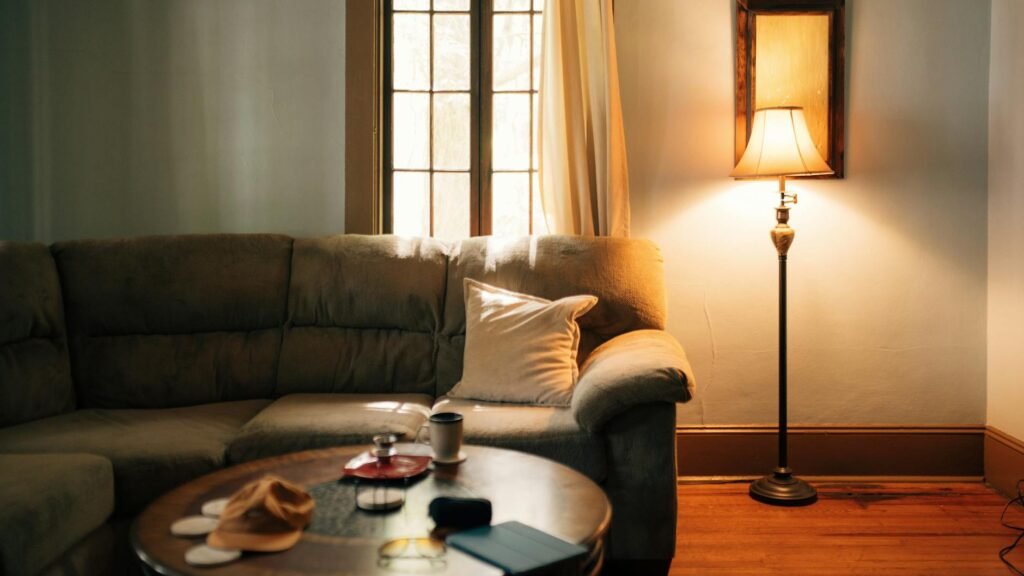
The habit that quietly pushes bedtime later usually does not look dramatic. It looks like normal life: finishing dishes under bright ceiling lights, checking email on a laptop, stepping into a bright bathroom, then scrolling in bed because you are tired but not quite sleepy enough. That matters because light is not just a way to see your home. It is one of the main signals that tells your body clock whether it is still daytime or time to wind down. Bright artificial light late in the evening can interfere with melatonin release and make it harder to fall asleep. (nhlbi.nih.gov)
Why evening light keeps winning even when you feel tired
Your body runs on circadian timing. NIH explains that the light-dark cycle helps set that timing, and the brain increases melatonin in the evening as darkness rises. When bright artificial light shows up late, that process can be disrupted. The result is a frustrating mismatch: you may feel worn out from the day, but your body clock is still getting a wakefulness signal. (nhlbi.nih.gov)
This is why the problem is often a stack, not a single device. A bright kitchen, then a bathroom mirror, then a laptop, then a phone can keep extending the signal that the day is not over. In a controlled study, exposure to ordinary room light before bedtime suppressed melatonin onset and shortened melatonin duration compared with dim light. That matters because it means you should not reduce the issue to blue-light settings alone or assume only screens count. (pmc.ncbi.nlm.nih.gov)
Timing matters too. CDC and NIOSH guidance points to the last stretch before bed as a sensitive window, with NIOSH specifically noting that avoiding bright light about 2 hours before bedtime can make it easier to fall asleep. That gives you a useful planning rule: if you want to be asleep at 10:30 p.m., your light routine should start changing around 8:30 p.m., not when your head hits the pillow. (archive.cdc.gov)
Use the DUSK Drift Audit before you buy anything
Below is an original tool which I developed to assist in gathering and evaluating data for this article – Once again, please rate the final two hours prior to your actual target bedtime rather than when you actually went to bed. Using zero, one or two points for each indicator, you will have a total possible score of 30 points across all categories. The primary purpose of this exercise is to determine if exposure to light during the late evening hours is gradually conditions our body to stay awake longer than it would normally do due to sleep debt.
| DUSK category | 0 points | 1 point | 2 points |
|---|---|---|---|
| D – Direct bright light to your eyes | Mostly lamps or dim lighting below eye level | One bright overhead or vanity light used briefly | Bright overhead, vanity, or task lighting on most nights |
| U – Up-close screens in the last hour | No screen use | Brief use or low-priority checking | 30+ minutes of close-range phone, tablet, or laptop use |
| S – Strong late tasks | Bright chores and work happen earlier | One bright late task most nights | Kitchen, bathroom, or work lighting stays bright through the last hour |
| K – Keep-morning-light habit | Outdoor light within about an hour of waking most days | Some days | Rarely get outside or into strong morning light |
Light should not be your primary issue if you score between 0 and 2 points. If you score between 3 and 5 points your evening lighting is a significant factor. If you score between 6 to 8 points your evening lighting is highly likely to be the cause of your sleep disturbances. Please remember this is not meant to constitute a medical diagnosis. It is purely meant to guide your decision-making process regarding whether to make adjustments to your light usage before spending financial resources on sleep-related gadgets, sleep supplements, or continuing to experiment with a trial-and-error approach based on previous attempts.
A realistic household example
Consider a renter who wants to be asleep by 10:30 p.m. and wake at 6:30 a.m. Her actual pattern looks like this: dishes under bright kitchen lights from 8:50 to 9:20, bathroom and skincare under mirror lights from 9:40 to 9:55, laptop work from 9:55 to 10:35, and phone scrolling from 10:35 to 10:50. She also rarely gets outside before lunch. Her DUSK score is 7 out of 8. In that situation, the first move is not a $200 device. It is a better sequence. She can repurpose a living-room lamp, move one bright task earlier, plug her phone in outside the bedroom, and, if needed, spend a modest amount on a timer and warmer bulbs. The real financial win is not buying around the wrong problem.
What to change first, in order
- Set a target bedtime and count back 2 hours. That is your dim-down window. If you want lights out at 11:00 p.m., the lighting plan starts at 9:00 p.m. (archive.cdc.gov)
- Turn off overhead lights in the rooms where you linger most. Keep one lamp on if you need light, but stop bathing the whole room in bright light. This is a practical way to reduce late-evening brightness that can interfere with melatonin. (nhlbi.nih.gov)
- Pull bright tasks earlier when possible. Kitchen cleanup, packing lunches, long showers, mirror-heavy grooming, and late laptop work are common offenders because they extend exposure to strong light right up to bedtime. (archive.cdc.gov)
- Use the CDC screen rule as a floor, not a finish line. Turn off electronics at least 30 minutes before bedtime, and if sleep has been drifting later, test a 60-minute screen-off window for 2 weeks. (cdc.gov)
- Get morning light the next day. NIOSH notes that bright light after waking can help you fall asleep more easily at night, so morning outdoor light is not just a bonus habit here. It is part of the reset. (archive.cdc.gov)
- Protect the bedroom itself. NIH and CDC both recommend a dark, cool, quiet room. That means visible indicator lights, bright alarm clocks, and hall light spilling under the door are worth fixing. (nhlbi.nih.gov)
| Habit | Why it can delay sleep | Lowest-cost fix | Spend-if-needed upgrade |
|---|---|---|---|
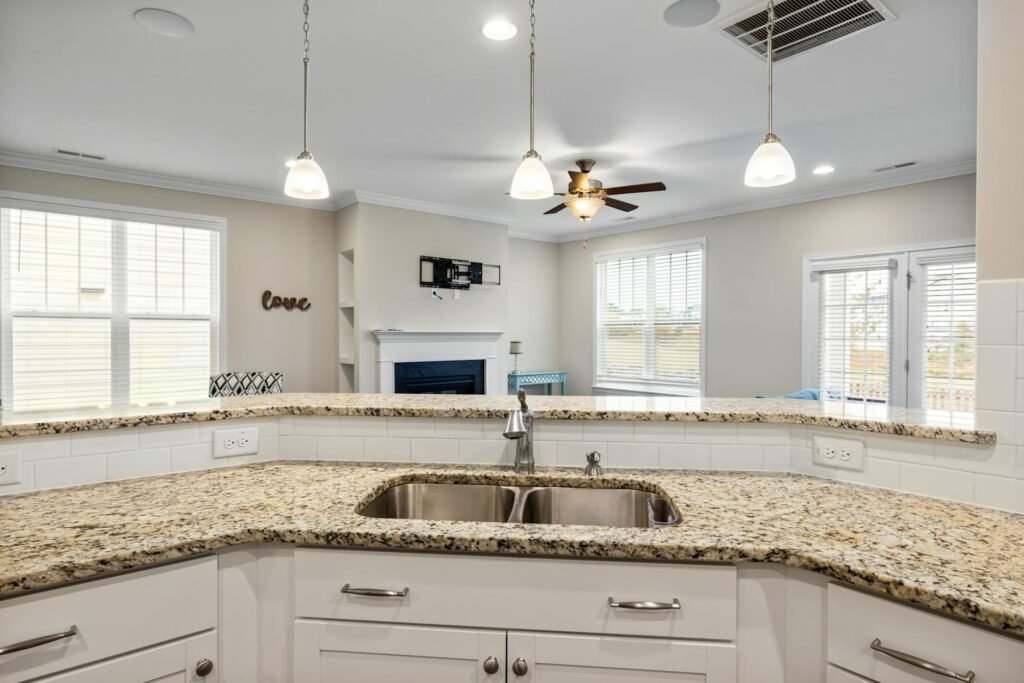
| Ceiling lights on in the living room until bed | Adds broad bright light exposure late in the evening | Use one side lamp and shut off overheads | Timer or smart plug for an automatic dim-down |
| Kitchen cleanup right before bed | Keeps you under bright task lighting during a sensitive window | Move part of cleanup earlier or leave nonessential tasks for morning | Swap one harsh bulb for a lower-output warm bulb in the main task area |
| Phone scrolling in bed | Adds close-range bright light after you are already trying to wind down | Charge the phone outside the bedroom | Dedicated alarm clock if the phone is your alarm |
| Late laptop work on the couch | Combines mental activation with direct light close to the eyes | Move work earlier or end with low-light admin only | Secondary workspace with task lighting away from the bedroom |
| Bright bathroom mirror routine at the very end of the night | Puts strong light close to the face right before bed | Shorten the routine or do part of it earlier | Lower-watt bulb or alternate lamp for nighttime use |
Do not spend your sleep budget in the wrong place
When making a decision about something, if money is involved, start by reducing friction, not by purchasing the highest prestige sleeping product. The first few dollars are often spent on what helps to simplify the dim-down process. This could be using a lamp you already have, a simpler way to charge your phone, tape to block out light, a timer, or changing the bulb in the room that you are bright for too long. A wearable item, a sunrise clock, or other specialty devices, may help later, but only after you determine if your sleep issue is due to timing or technology.
Common mistakes that keep the problem going
- Treating blue light as the only problem while leaving bright room lighting untouched. Ordinary room light can matter too. (pmc.ncbi.nlm.nih.gov)
- Dimming the bedroom but keeping the kitchen and bathroom bright right up to bedtime. The body clock responds to total late-light exposure, not just what happens after you get under the blanket. (archive.cdc.gov)
- Following a 30-minute screen rule but working under bright overhead lighting until the last minute. That often leaves the main issue in place. (cdc.gov)
- Expecting one early night to undo a week of late evenings. Circadian timing responds to repeated cues, so consistency matters. (nigms.nih.gov)
- Buying products before measuring the final 2 hours before bed. If you never audit the routine, you can spend a lot while changing very little.
When dimmer evenings are not enough
Sometimes late light is only one piece of the puzzle. Irregular schedules, caffeine too late in the day, stress, alcohol, travel, and shift work can all keep sleep off track. CDC and NHLBI both emphasize consistent sleep timing and a dark bedroom, and they also advise talking with a healthcare provider if sleep problems are regular or you notice possible sleep-disorder symptoms. (nhlbi.nih.gov)
Shift workers are the clearest example of a limit case. NHLBI notes that people who work at night may need bright light at work and stronger light blocking at home during daytime sleep. So if your schedule requires night work, a generic early-evening dim-down plan may not fit your life without adjustment. (nhlbi.nih.gov)
There is also a point where more bulb tweaking becomes avoidance. If you have frequent loud snoring, breathing that starts and stops, gasping for air, persistent daytime sleepiness, or you often lie awake for a long time before falling asleep, those can be signs of conditions that deserve evaluation rather than endless home experiments. NHLBI and CDC both say regular sleep problems are worth discussing with a clinician. (nhlbi.nih.gov)
This article is for general information and is not medical advice. If sleep trouble is frequent, you feel excessively sleepy during the day, or you have signs such as loud snoring, gasping, or repeated difficulty falling asleep, contact a qualified healthcare professional. (nhlbi.nih.gov)
How to verify whether light is really your issue
Do not judge this by one good night or one bad night. Use a short sleep experiment. CDC says a sleep diary can help track what is going on, and NHLBI suggests the same basic idea. A simple note on paper or in your phone is enough if you use it consistently. (cdc.gov)
- For 7 nights, log your usual pattern: target bedtime, actual bedtime, screen-off time, whether overhead lights stayed on, estimated time to fall asleep, wake-ups, wake time, caffeine timing, and whether you got morning outdoor light. CDC recommends including several of these routine details in a sleep diary. (cdc.gov)
- For the next 7 nights, keep wake time as steady as you can, dim lights 2 hours before your target bedtime, turn off electronics at least 30 minutes before bed, and protect bedroom darkness. (archive.cdc.gov)
- Get morning light during the second week as part of the test. This makes the experiment fairer because it strengthens the day-night contrast your body clock uses. (archive.cdc.gov)
- Compare medians, not standout nights. Look at your typical sleep-onset time, how often you were awake for a long stretch, and whether waking up in the morning felt easier.
- If nothing moves after 2 weeks of real consistency, stop assuming the answer is another product. Recheck caffeine, schedule drift, stress, and whether a clinician should screen for insomnia, sleep apnea, or another issue. (cdc.gov)
Bottom line
The evening light habit that pushes sleep later is usually not one dramatic mistake. It is a chain of ordinary choices that keeps telling your body the day is still active. If you dim earlier, cut close-range screens late, protect bedroom darkness, and add morning light, you may be able to move sleep earlier with very little new spending. If that does not work, the next smart move is evaluation, not more gadgets. (nhlbi.nih.gov)
FAQ
Is my phone the main problem, or is it the room lighting?
It can be both. NHLBI lists phones and TV screens as examples of bright artificial light that can disrupt evening melatonin release, but research also found that ordinary room light before bed can suppress melatonin and shorten its duration. If your room is bright, fixing only the phone may leave a lot of the problem in place. (nhlbi.nih.gov)
How early should I dim the lights before bed?
A practical starting point is about 2 hours before your target bedtime. NIOSH specifically notes that avoiding bright light 2 hours before bedtime can make it easier to fall asleep. (archive.cdc.gov)
Do blue-light filters or glasses solve this by themselves?
They may help some people, but they do not replace managing total late-evening light exposure. The larger issue is timing and overall brightness, and ordinary room light can still matter even if a screen is filtered. (pmc.ncbi.nlm.nih.gov)
What if I have to work late on a laptop?
Start by changing the sequence before you change the shopping list. Try to move demanding work earlier, keep the laptop out of bed, reduce room brightness after you finish, and build a real transition before sleep. CDC still recommends turning off electronics at least 30 minutes before bed as a basic rule. (cdc.gov)
When should I talk with a doctor instead of trying more home fixes?
Talk with a healthcare professional if sleep problems happen regularly, you feel sleepy even after enough time in bed, or you have symptoms such as loud snoring, breathing pauses, gasping, or persistent trouble falling asleep. CDC and NHLBI both point readers toward medical evaluation when sleep issues are ongoing or suggest a sleep disorder. (cdc.gov)
References
- NHLBI: How Sleep Works – Your Sleep/Wake Cycle – https://www.nhlbi.nih.gov/health/sleep/sleep-wake-cycle
- NHLBI: Healthy Sleep Habits – https://www.nhlbi.nih.gov/health/sleep-deprivation/healthy-sleep-habits
- CDC: About Sleep – https://www.cdc.gov/sleep/about/index.html
- CDC/NIOSH: Effects of Light on Circadian Rhythms – https://archive.cdc.gov/www_cdc_gov/niosh/emres/longhourstraining/light.html
- NIGMS: Circadian Rhythms – https://www.nigms.nih.gov/education/fact-sheets/Pages/circadian-rhythms.aspx?trk=public_post_comment-text
- PMC: Exposure to Room Light before Bedtime Suppresses Melatonin Onset and Shortens Melatonin Duration in Humans – https://pmc.ncbi.nlm.nih.gov/articles/PMC3047226/
- NHLBI: Sleep Apnea Symptoms – https://www.nhlbi.nih.gov/health/sleep-apnea/symptoms
- NHLBI: Insomnia Symptoms – https://www.nhlbi.nih.gov/health/insomnia/symptoms