
TL;DR
- A bedroom can feel cozy while still sending wake-up signals through light, heat, noise, notifications, and mixed-use habits. CDC and NHLBI guidance consistently points to a dark, quiet, cool room and fewer electronics before bed. (cdc.gov)
- If a purchase does not reduce light, noise, temperature problems, or mental stimulation, treat it as decor, not a sleep fix.
- Start with low-cost tests such as covering LEDs, moving the phone charger out of the room, adjusting bedding, adding a fan, and blocking early-morning light before you buy bigger furniture.
- If you still have loud snoring, gasping, breathing pauses, major daytime sleepiness, or long-running trouble falling or staying asleep, the room may not be the main issue. (nhlbi.nih.gov)
Important: This article is informational, not medical advice. Persistent insomnia, loud snoring, breathing pauses, or major daytime sleepiness deserve medical evaluation. (nhlbi.nih.gov)
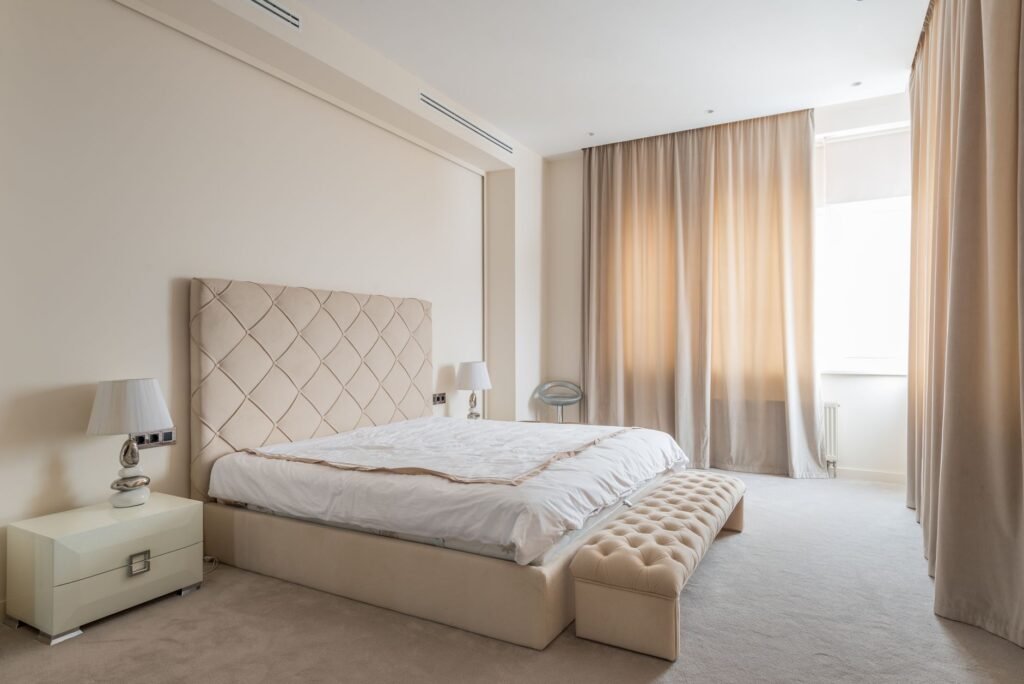
The frustrating version of a bad sleep room usually is not ugly. It may be attractive, cozy, and expensive enough to feel finished. Soft bedding, a warm lamp, a candle, a TV, a phone charger, and maybe a desk can make the room feel relaxing while you are awake. But sleep is controlled less by style than by signals. Light, darkness, room temperature, noise, and habit cues all feed your sleep-wake cycle, and bright artificial light late in the evening can make it harder to fall asleep. (nhlbi.nih.gov)
People are wasting money by buying another pillow or cuter lamp to trying to solve a bigger problem of light coming through their thin curtains from a streetlight, having their thermostat set too high, having a clock that spins around continually, or repeatedly picking up their phone to check social media before trying to sleep. The decision rule for this article is simple, if the purchase does not change light, noise, temperature or stimulation, it may improve the decor of the room, but will not be able to improve the quality of the sleep in the room.
Use the Calm-to-Sleep Gap Audit
Score each category 0, 1, or 2. A low score tells you where to spend first. The categories below are based on standard sleep guidance that emphasizes darkness, quiet, cool temperatures, consistent schedules, and limiting electronics before bed. (cdc.gov)
- Assess the level of darkness in the room as follows: 0 If window lights, LEDs or bright clocks are seen from where your head lies on the pillow – count this as 0. 1 If the room is either dim but not dark yet. 2 If the room remained generally dark until somewhere between the hours of 5 and 7 at your wake-up time.
- Sound: 0 = You’ve been awoken by alert or traffic noises, pets or at home; 1 = There are some sounds present but are being covered by something else; 2 = The room is either quiet or has a sound that is so constant that it can easily become lost.
- Temperature: 0 if you wake sweaty, stuffy, or cold; 1 if the temperature varies but is tolerable; 2 if the room stays cool and stable.
- Device Count: 0 When the phone is “on” your nightstand; when the TV or clock are outside of your sleep zone; when the phone is in your peripheral vision after being set to silent. 1 When all of your devices are set to vibrate/silent and still visible from where you sleep; 2 When your emails and messages from all of your devices have screens off and/or visible device lights off.
- If you use the room for work, arguing, doom scrolling, or high-definition viewing in bed, enter a 0. If you use the room for mixed purposes but can still shut off all the other uses, enter a 1. If you generally sleep and use it for intimate activities, enter a 2.
- Timing: 0 if your bedtime and wake time swing widely; 1 if they are somewhat regular; 2 if they are fairly consistent across the week.
Here’s how to interpret the scale: A rating of 0-5 indicates that the bedroom likely contributes to the sleeping problems; a rating of 6-9 means more than one major fix probably exists; and a rating of 10-12 indicates that the room probably has no major problems and suggests considering your sleep schedule, caffeine, stress, or possibly a sleeping disorder.
What looks relaxing but works against sleep
Light that feels cozy
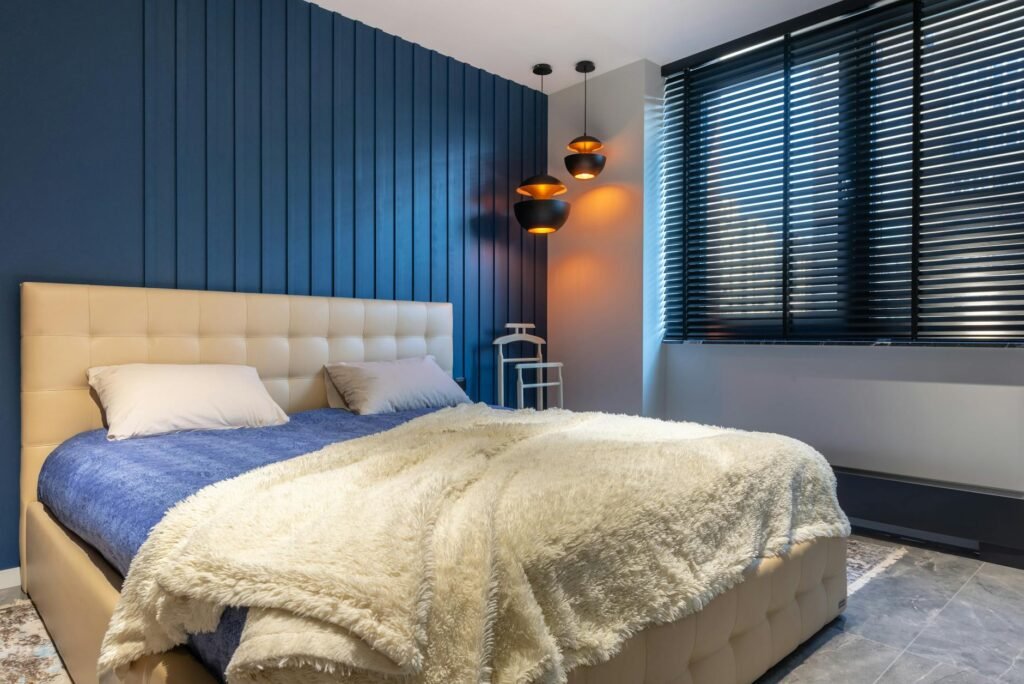
Warm lamps, decorative string lights, TV glow, and bright alarm clocks all seem gentle, but your brain still reads evening light as a cue to stay alert. NHLBI notes that light and darkness help set the circadian rhythm, and bright artificial light at night can interfere with melatonin release. (nhlbi.nih.gov)
Overheating disguised as comfort
Many people build for softness instead of temperature control: thick comforters, layered throws, flannel sheets, and closed doors. CDC guidance says the bedroom should be cool, and a CDC sleep bulletin notes that about 65 to 68 degrees Fahrenheit works for many adults. That does not mean everyone needs the same number, but it is a useful test range if you keep waking up hot. (cdc.gov)
Quiet enough to relax, not quiet enough to sleep
A room can sound fine at bedtime and still be full of sleep breakers: notification buzzes, a pet at the door, a humming TV, traffic at 5 a.m., or a partner’s alarm. CDC defines quality sleep as uninterrupted and refreshing sleep, and CDC guidance specifically recommends reducing noise, silencing alerts, and using earplugs if needed. (cdc.gov)
A room that still behaves like an office or lounge
If you answer email in bed, watch late-night TV there, or keep your work setup in full view, the room can stay mentally on even after the lights go down. CDC guidance advises using the sleep space only for sleep and intimacy so your brain learns a cleaner association with rest. (cdc.gov)
The bedroom may be fine, but the timing is off
Sometimes the room gets blamed for a schedule problem. CDC and NHLBI both recommend keeping a regular sleep schedule, and NHLBI notes that caffeine can interfere with sleep for hours and bright screens before bed can disrupt the sleep-wake cycle. If the room scores well on the audit but weekends, late coffee, or bedtime scrolling stay messy, fix those before buying anything else. (cdc.gov)
The cheapest changes usually beat the prettiest ones
Start by buying the smallest thing that changes a signal. That keeps the budget tight and makes it easier to tell what actually helped. A sleep mask may prove that light is the issue before you spend on custom drapes. A fan may show that airflow matters before you touch the HVAC. A $15 door sweep may be more useful than a $150 throw blanket.
| If this is happening | Likely cause | Low-cost test first | Spend more only if… |
|---|---|---|---|
| You wake before sunrise or from a streetlight. (nhlbi.nih.gov) | Light leak and device glow | Cover LEDs, move the charger, and try a sleep mask or temporary blackout shade. | Buy blackout curtains or liners only if the cheap test clearly helps. |
| You fall asleep fine but wake sweaty or stuffy. (cdc.gov) | Room too warm or bedding too heavy | Lower room temperature a bit, use a fan, or swap one heavy layer for a lighter blanket. | Consider more breathable bedding or better temperature scheduling if the room keeps drifting. |
| You wake to pings, buzzes, or clock light. (archive.cdc.gov) | Visible electronics and alerts | Charge the phone outside the room and hide or dim the clock. | Buy a simple alarm or dimmable clock only if you still need one. |
| You dread going to bed because your mind speeds up. (cdc.gov) | Bedroom is linked to work, TV, or scrolling | Remove work gear, set a lights-out routine, and use the last hour for quieter activity. | Use closed storage or a screen divider if the room must do double duty. |
| Your heating or cooling bill is already high. (energy.gov) | Whole-home HVAC changes may be the expensive fix, not the first fix | Test a fan, bedding swap, or selective nighttime scheduling first. | If you use a programmable or smart thermostat, follow DOE and manufacturer guidance. Some variable-capacity heat pumps may do best with manufacturer-recommended controls. (energy.gov) |
Tip: A useful budget filter: if you cannot name the exact sleep problem a purchase is supposed to solve, do not count it as a sleep upgrade.
A realistic example: the room looked finished, but the sleep system was broken
Consider a composite renter household with a $150 budget. They had already spent about $345 on a new duvet, a pair of bedside lamps, extra pillows, and decorative art because the room felt unfinished. Sleep was still rough: one person woke around 4:45 a.m. from early light, both felt hot around 2 a.m., and the phone on the nightstand lit up whenever overnight messages came in.
Instead of buying more decor, they ran the audit. Their low scores were darkness, temperature, and devices. The next round of spending was much smaller and much smarter: $22 for a temporary blackout shade, $28 for a fan, $14 for a door sweep, $18 for a basic alarm clock so the phone could charge outside the room, and $24 for a storage bin that got work papers out of sight. Total: $106. That does not guarantee perfect sleep, but it is a much better first bet than another comforter because every dollar changed a sleep signal.
Here is the financial lesson: Most of your sleep upgrades should be tested to determine if they belong in your home at all. You need to identify a specific sleep-related problem that you’ve noticed and prove that it solves the issue before making the purchase. In other words, your sleep upgrades should be evaluated as soon as possible and be able to solve your sleep problems in one week or less.
If you can’t articulate what issue this upgrade addresses, it’s likely for decoration purposes only.
Run a 7-night bedroom reset before you buy anything big
- Night 1: Keep a simple baseline. Write down bedtime, wake time, how many times you woke up, and how rested you felt in the morning. NHLBI says a sleep diary can help identify patterns. (nhlbi.nih.gov)
- Night 2: Fix the visible light. Cover LEDs, dim the clock, shut off the TV, and keep the room darker than usual. CDC and NHLBI both emphasize a dark room and less evening screen light. (cdc.gov)
- Night 3: Remove the phone from the nightstand. Charge it outside the room or far enough away that you cannot see alerts. (archive.cdc.gov)
- Night 4: Test temperature only. Lower the room a bit or lighten the bedding so you can tell whether heat is the wake-up trigger. A cool room supports sleep. (cdc.gov)
- Night 5: Test noise control. Use a fan, earplugs, or a door sweep, and silence all nonessential alerts. (cdc.gov)
- Night 6: Remove work and entertainment cues. Clear the desk, put away the laptop, and skip TV in bed. Use the last hour before sleep for quieter, lower-light activities. (nhlbi.nih.gov)
- Night 7: Repeat the best combination and compare it with Night 1. If the room improves but sleep still does not, start looking at schedule, caffeine timing, alcohol, stress, or a possible sleep disorder. Alcohol can make sleep lighter even if it seems to help you doze off. (nhlbi.nih.gov)
Common mistakes that cost money and protect the wrong problem
- Replacing the mattress before you test light, noise, and temperature. Mattresses matter, but many bad-mattress complaints are really heat, glare, or interruption problems.
- Keeping the TV on because it feels calming. Screen light can disrupt the sleep-wake cycle, even when the show itself feels familiar. (nhlbi.nih.gov)
- Using alcohol as a sleep tool. It may help you drift off, but NHLBI notes it can make sleep lighter. (nhlbi.nih.gov)
- Trying five changes at once and learning nothing. Test one main variable every couple of nights so you know what deserves your money.
- Buying a smart thermostat without checking the system. ENERGY STAR notes that some variable-capacity heat pumps perform best with manufacturer-recommended thermostats. (energystar.gov)
When a better bedroom is not enough
Sometimes the room is only a minor contributor. If you have loud, frequent snoring, gasping, breathing pauses during sleep, or major daytime sleepiness, NHLBI says those can be signs of sleep apnea and may warrant a sleep study. (nhlbi.nih.gov)
If you have trouble falling asleep or staying asleep at least three nights a week and the problem lasts for three months or longer, NHLBI describes that pattern as chronic insomnia. At that point, another bedroom purchase is usually not the smartest next step. A clinician or sleep specialist is. (nhlbi.nih.gov)
Additionally, at this point in your business, the argument over budget shifts rapidly from additional dollars needed to decorate / create your environment, to more dollars needed for evaluation in the event that you aren’t getting what you want in your environment. If your room scores well, it still may be helpful to evaluate why you are feeling like you are “run down”.
How to verify that the advice is working
Do not grade your room by vibe alone. Grade it by outcomes. Keep a sleep log for 1 to 2 weeks, change one major variable at a time, and look for fewer awakenings, faster sleep onset, and better morning alertness. NHLBI specifically recommends a sleep diary when sleep problems are persistent, and CDC defines quality sleep as sleep that is uninterrupted and refreshing. (nhlbi.nih.gov)
A strong test question is: how much did something improve? If the answer is just now the room looks good or well, it was a decoration purchase. But if your answer is: I slept two times in a row instead of three times then that’s a sleep solution.
Bottom line
The bedroom that ruins sleep is often not chaotic. It is simply sending the wrong signals. Fix darkness, noise, temperature, device glow, and room purpose before you buy expensive upgrades. Most adults need at least seven hours of sleep, but better sleep quality starts with a room that behaves like a sleep space, not just a stylish one. (cdc.gov)
Frequently Asked Questions
Does a more expensive mattress usually solve this problem?
Not usually as a first move. CDC and NHLBI guidance focuses first on a dark, quiet, cool room and fewer electronics before bed. If your current mattress clearly causes pain, sagging, or overheating, replacement can make sense, but it is not the automatic answer to every sleep complaint. (cdc.gov)
Is it really worth taking the phone out of the bedroom?
For many people, yes. NHLBI says bright artificial light from phones and TVs can interfere with the sleep-wake cycle, and CDC guidance recommends reducing sleep distractions such as alerts and visible light. Moving the charger is one of the cheapest high-value tests you can run. (nhlbi.nih.gov)
What temperature should I try first?
Start cooler than you think. CDC says the room should be cool, and a CDC sleep bulletin says about 65 to 68 degrees Fahrenheit works for most people. Use that as a test range, not a rigid rule. (cdc.gov)
Are blackout curtains worth it for renters?
Often, yes, if light is the obvious trigger. NHLBI recommends blocking light distractions, especially for daytime sleep, and light at night can interfere with the signals that help you feel sleepy. Start with a temporary shade or liner first so you know the problem really is light. (nhlbi.nih.gov)
When should I stop self-experimenting and call a doctor?
Call sooner if there is loud snoring, gasping, breathing pauses, or serious daytime sleepiness. Also consider medical help if you have difficulty falling or staying asleep at least three nights a week for three months or longer. (nhlbi.nih.gov)
Can a thermostat upgrade save money and improve sleep?
Possibly, but do not assume the gadget is the first fix. DOE notes that thermostat setbacks can save energy, while ENERGY STAR notes that some homes, especially those with variable-capacity heat pumps, may do best with manufacturer-recommended controls. Test low-cost temperature fixes first, then upgrade if the pattern is clear. (energy.gov)
References
- CDC: About Sleep – https://www.cdc.gov/sleep/about/index.html
- NHLBI: Healthy Sleep Habits – https://www.nhlbi.nih.gov/health/sleep-deprivation/healthy-sleep-habits
- NHLBI: Your Sleep/Wake Cycle – https://www.nhlbi.nih.gov/health/sleep/sleep-wake-cycle
- CDC NIOSH: Improve Sleep When Times Are Tough – https://www.cdc.gov/niosh/bulletin/2020/sleep.html
- Department of Energy: Programmable Thermostats – https://www.energy.gov/energysaver/programmable-thermostats
- ENERGY STAR: Smart Thermostats FAQ – https://www.energystar.gov/products/heating_cooling/smart_thermostats/smart_thermostat_faq
- NHLBI: Insomnia Diagnosis – https://www.nhlbi.nih.gov/health/insomnia/diagnosis
- NHLBI: Sleep Apnea Symptoms – https://www.nhlbi.nih.gov/health/sleep-apnea/symptoms